

The photograph that breaks my heart
There is a photograph of Hansie Cronje taken at Newlands in January 2000 — three months before his world ended. He is smiling the easy smile of a man who owns his universe: the captain of the best one-day side on the planet, the golden boy of a nation rebuilding itself after apartheid, a devout family man the press called the most trustworthy figure in South African sport. I look at that photograph now and I feel something I did not feel looking at the footage of Sandpapergate or reading the transcripts of the Lord's no-balls. Those scandals were about greed. This one feels like a tragedy in the old sense of the word — a great man, a fatal flaw, and a fall so complete that even his death, two years later, could not close the story. This is the Hansie Cronje scandal: how South Africa's most beloved captain became the most famous match-fixer in cricket history, and why, a quarter of a century later, the game is still living with what he did.

Hansie Cronje at Newlands in January 2000 — three months before his world collapsed. (Paddy Briggs / Wikimedia Commons, public domain)
The hero South Africa worshipped
To understand the scale of the betrayal, you have to understand who Hansie Cronje was before April 2000. He was not some fringe player tempted by easy money. He was, by every measure available, one of the finest captains the game has ever produced. Between 1994 and 2000 he led South Africa in 53 Tests, winning 27 and losing just 11, and in 138 one-day internationals, winning 99 of them at a win percentage of 73.7 — one of the highest in the history of the format. As a player he was the complete all-rounder: 3,714 Test runs at 36.41 with 43 wickets, and 5,565 ODI runs at 38.64 with 114 wickets across 188 ODIs. Sachin Tendulkar — the greatest batsman of that era — once said Cronje was the only bowler who truly unsettled him, and dismissed him five times in Tests.
But the numbers only tell half of it. Cronje was the man who carried South African cricket out of isolation and into the modern age. He took over the captaincy at 25 in 1994, led the side to its first-ever ICC trophy at the 1998 KnockOut Trophy, and built a team — Kirsten, Kallis, Donald, Pollock, Rhodes — that played hard, clean, brilliant cricket and became the world's most respected side. He was openly, famously devout, and South Africans did not just admire him; they trusted him the way you trust a family member. That trust is what makes everything that follows so devastating. When the news broke, it was not just a sports scandal. In a young democracy still learning to believe in its institutions, it felt like a personal betrayal by someone the country had decided to believe in.
January 2000: the "miracle" at Centurion that wasn't
The first thread of the scandal — the one nobody recognised at the time — came in the fifth Test against England at Centurion in January 2000. Rain had washed out more than three days of the match. South Africa were already 2–0 up in the series. The game was dead. And then, on the final day, something extraordinary happened: Cronje approached England captain Nasser Hussain and proposed that both sides forfeit an innings so they could manufacture a result on the last day. Hussain later compared the negotiation to the haggling scene in Monty Python's Life of Brian — Cronje accepted almost immediately whatever target Hussain named. South Africa declared, both sides forfeited, and England chased 251 to win. It remains the only voluntary innings forfeiture in the entire history of Test cricket.
At the time, the cricket world applauded. Here was a captain so committed to positive cricket that he would give up a certain draw to chase a result. Michael Holding, commentating for Sky Sports, was one of the very few who smelled something wrong. "I said if this game was being played on the Indian subcontinent, people would start talking about bookmakers," Holding said later. "I just knew something was going on and that was my total focus. I was basically disgusted at what I was watching."
Holding was right to be disgusted. What emerged months later at the King Commission was that Cronje had been in contact with a bookmaker named Marlon Aronstam, who paid him for the arrangement — reports put the payment at around 50,000 rand (roughly $6,000) plus a leather jacket. Cronje had manufactured a Test match finish for a bookie and been celebrated as a sporting romantic for doing it. I think about that often: the most corrupt act of his career was the one the world applauded loudest.
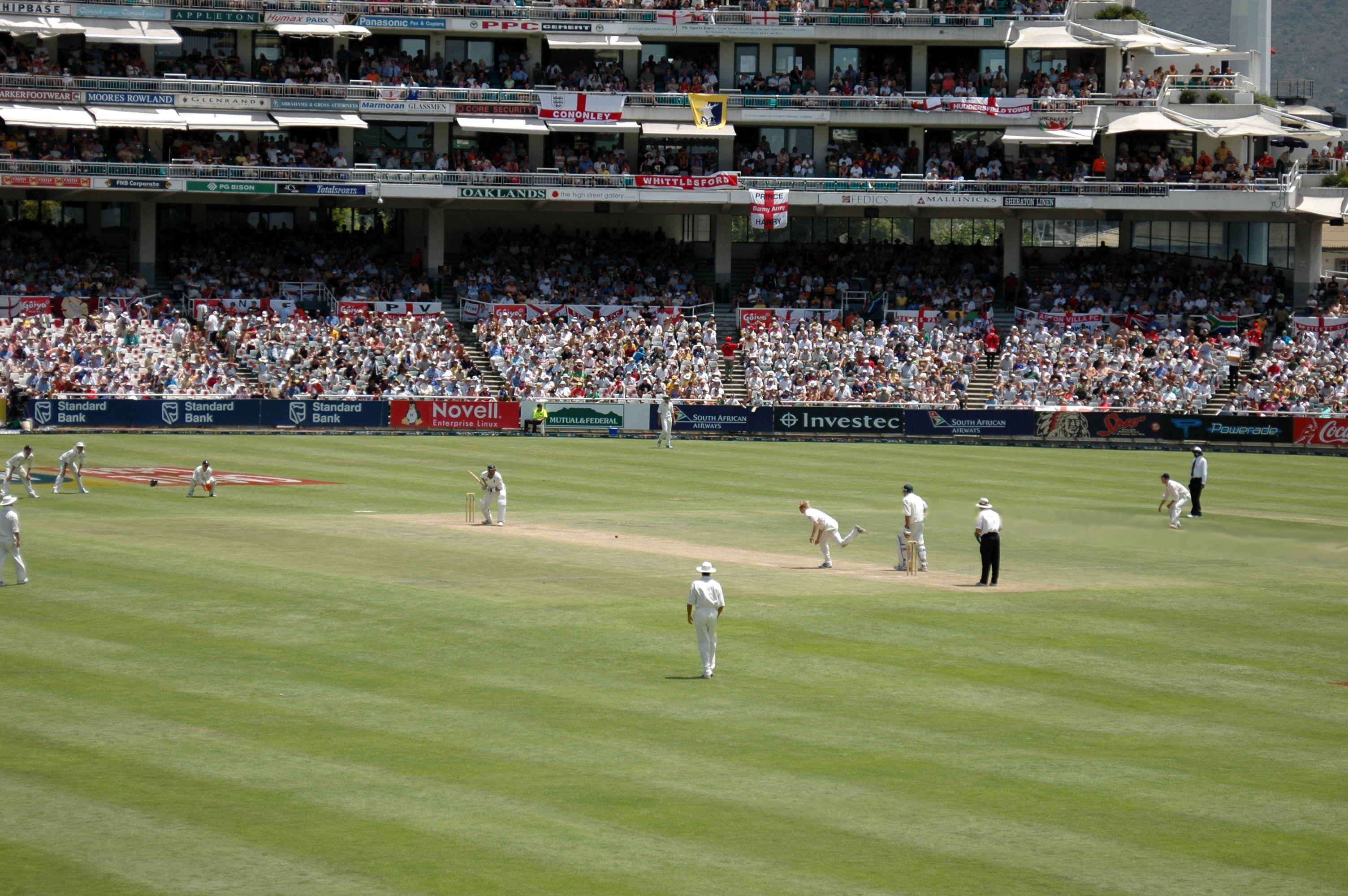
South Africa vs England Test action at Newlands, Cape Town (2005). The two nations whose rain-ruined Centurion Test in January 2000 produced the most infamous "manufactured" finish in cricket history. (Louis Rossouw / Wikimedia Commons, CC BY 2.0)
March 2000: the fix at Nagpur that died on the field
Two months later, South Africa toured India. It should have been a triumph. Cronje's side inflicted a rare 2–0 home Test series defeat on India — South Africa's first-ever Test series win on Indian soil. But then came the one-day series, and something went badly wrong: India, under new captain Sourav Ganguly, won it 3–2.
What nobody knew then was that the fifth ODI at Nagpur on March 19, 2000 had been the subject of a betting plot. Cronje had offered his own opening batsman Herschelle Gibbs $15,000 to score fewer than 20 runs in the match. He had offered fast bowler Henry Williams another $15,000 to concede more than 50 runs in the same game. Two other players — Nicky Boje and Pieter Strydom — were also named in connection with the approaches.
And then the plot died the most honourable death imaginable: it died on the field. Gibbs, to his eternal credit, walked out and smashed 74 off 53 balls. Williams injured his shoulder and could not even complete his second over. Neither man received a cent. I have always found this the most human detail of the whole scandal. Bookmakers can buy a captain. They cannot buy what happens between the white lines when a player decides, in the moment, that his pride is worth more than the money. The fix failed because the cricketers refused to be fixed.

Herschelle Gibbs at a training session — Cronje offered him $15,000 to score under 20 at Nagpur in 2000; Gibbs made 74 off 53 balls instead. (YellowMonkey / Wikimedia Commons, CC BY-SA 4.0)
April 7, 2000: the tapes that destroyed a hero
On April 7, 2000, the Delhi Police Crime Branch detonated the biggest bomb in cricket history. Crime Branch officer Ishwar Singh Redhu revealed that the police possessed a recording of a telephone conversation between Hansie Cronje and Sanjeev Chawla, a London-based bookmaker and a major figure in the Indian betting market. The tapes, the police said, showed Cronje discussing the fixing of one-day internationals played during the recent tour of India. Three other players — Gibbs, Boje and Strydom — were named as having been approached.
The story of how the tapes surfaced is almost absurdly cinematic. Pradeep Srivastava, a deputy commissioner in Delhi's crime department, had been working on extortion cases and had taken some wire-tap cassettes home with him. One of his children put a cassette into the home hi-fi system and asked his father a question no policeman ever expects from his own child: why did he have a recording of Hansie Cronje's voice? The boy had watched a post-match interview with Cronje on Indian television the previous day and recognised the voice instantly. A child's ear for a cricket hero's voice — that is what brought down the most powerful man in South African cricket.
The news agency AFP broke the story before the official police press conference, thanks to Delhi-based cricket reporter Kuldip Lal. The reaction from South Africa was fury. Ali Bacher, the managing director of the United Cricket Board, rang the AFP bureau and blasted the agency for ruining the reputation of one of South Africa's most iconic personalities. He threatened to sue. Lal remembers thinking that if the story was wrong, several journalists would need to look for new jobs. Bacher, to his lasting credit, later rang back and apologised for the outburst. The tapes were real.
Denial, then the 3am confession
For four days, Cronje did what every cornered man does: he denied everything. On April 8, the United Cricket Board of South Africa officially denied that any of its players were involved in match-fixing. Cronje himself said the allegations were "completely without substance." A day later he went further: "I want to make it 100 per cent clear that I deny ever receiving any sum of money during the one-day international series in India. I want to also make it absolutely clear I have never spoken to any member of the team about throwing a game."
The denial lasted until 3am on April 11. In a Durban hotel, Cronje walked into the suite of Rory Steyn — a South African security consultant travelling with the Australian team — with all the lights on and a handwritten document in his hand. "You may have guessed," he told Steyn, "but some of the stuff that is being said against me is actually true." Hours later, he confessed to Ali Bacher that he had not been "entirely honest." The statement he released was the most pitiful in cricket history: "To my wife, family, and teammates, in particular, I apologise. The greatest honour which can be bestowed upon any cricketer is to lead his country's national side. I have failed in my moral and professional duties."
What he admitted to, at that stage, was carefully limited. He said he had accepted between $10,000 and $15,000 from a London-based bookmaker for "forecasting" results — passing on team information and predictions — and insisted it was not match-fixing. It was a distinction he would cling to until the end of his life, and it is the key to understanding him: in Hansie Cronje's mind, there was a ladder of corruption, and he had only stood on the lower rungs. He was sacked as captain the same day. South Africa had lost its hero in the space of four days.
The roots ran deeper: Kanpur 1996 and the $30,000 for doing nothing
The King Commission of Inquiry — appointed by President Thabo Mbeki in May 2000 under Judge Edwin King, and opened on June 7 — is where the full, sordid picture emerged. Cronje was offered immunity from prosecution in exchange for complete disclosure, and on June 15 he released a statement laying out his entire history with the bookmakers. It was far worse than the $15,000 "forecasting" story.
It had started in 1996, during the third Test at Kanpur, when India's own captain Mohammad Azharuddin introduced Cronje to a bookmaker named Mukesh Gupta. Gupta offered Cronje $30,000 to persuade the South Africans to throw away wickets on the final day and lose the match. South Africa were 127 for 5 chasing an impossible 460; Cronje was already out. He spoke to no other player. He did nothing at all. And he kept the money. "I had received money for doing nothing," he admitted — a sentence that tells you everything about how corruption actually works. It does not begin with a dramatic fix. It begins with money arriving for nothing, and the recipient learning, slowly, that the money is never really for nothing.
On the return tour, Gupta paid him $50,000 for team information. From there the relationship deepened year by year: information, forecasts, arrangements — the Centurion forfeiture, the Nagpur approaches. Cronje later admitted he had accepted around $130,000 from bookmakers over a four-year period, though press investigations put the total as high as $140,000. He also reportedly admitted in an interview that he had "an unfortunate love of money," comparing it to an addiction: "I am not addicted to alcohol or nicotine, but I believe this is very similar to an alcohol problem." And in his testimony he gave the line that South Africa would never forget: "I tried to live a Christian life and walk the way the Lord wanted me to walk. I allowed Satan and the world to dictate terms to me."

Mohammad Azharuddin — by Cronje's own admission to the King Commission, it was the Indian captain who introduced him to bookmaker Mukesh Gupta in Kanpur in 1996. (BBC News / Wikimedia Commons, CC BY 3.0)
The King Commission: a captain shops his own players
The most damning day of the King Commission came on June 8, 2000, when Herschelle Gibbs took the stand. Gibbs revealed that Cronje had offered him $15,000 to score fewer than 20 runs in the Nagpur ODI, and had made a matching $15,000 offer to Henry Williams to concede more than 50 runs in the same match. Off-spinner Derek Crookes, also called as a witness, admitted he had been surprised to be asked to open the bowling at Nagpur — a small, strange detail that suddenly made terrible sense.
Read that again slowly, because it is the detail that separates Cronje from every other fixer in cricket history. Salman Butt, whose story opened our mega-scandals series, paid teenagers to bowl no-balls. The IPL bookies of 2013 bought fringe players. But Cronje was the captain — and he was offering his own teammates cash to fail. A captain's first duty is to protect his players. Cronje had turned his dressing room into a betting shop, and his players into items on a coupon. Gibbs' 74 off 53 balls was not just a good innings; it was a young man refusing to let his captain sell him.
There was one more twist that would surface years later. In 2013, Henry Williams told the Sunday Times that he and Gibbs had actually lied at the King Commission on the advice of their lawyers, to strengthen the case against Cronje — a claim their lawyers, Mike Fitzgerald and Peter Whelan, furiously denied, insisting the players had told the truth once Gibbs stopped trying to lie his way out. The truth of that sub-dispute was never settled. But the punishments were real enough: on August 28, 2000, a United Cricket Board disciplinary committee fined Gibbs 60,000 rand (about $8,500) and Williams 10,000 rand, and banned both from international cricket for the rest of the year. Pieter Strydom was acquitted of the betting charges against him. Nicky Boje, whom Ali Bacher always insisted was innocent, was never charged at all.
The punishments and the fallout that swallowed three nations
On October 11, 2000, with the evidence now overwhelming, the United Cricket Board banned Hansie Cronje from cricket for life — from playing, from coaching, from any involvement in the game at any level. His appeal was thrown out the following year; the board's counsel put it brutally: "Cronje is a cheat by his own confession." It was the end of a career that had contained 68 Tests and 188 ODIs and should have ended with statues. Even the Delhi Police would not let it rest: thirteen years later, in 2013, they filed a chargesheet alleging Cronje had received more than 12 million rupees in two payments from Sanjeev Chawla. A New Delhi court dropped the charges — the accused had been dead for eleven years. Cronje's father Ewie threatened legal action against the Indian police, insisting his son had received "less than a quarter" of the alleged amount. "Where is the money?" he asked. Nobody ever answered him.
The blast radius went far beyond one man. The scandal triggered parallel investigations that consumed two more countries' heroes. In Pakistan, Salim Malik received a life ban. In India, Mohammad Azharuddin — the man who had introduced Cronje to Mukesh Gupta in that Kanpur hotel room — was banned for life as well. Both bans were eventually overturned by courts years later, but the overturns came too late: two world-class careers were already over, ended in disgrace. Daryll Cullinan, one of Cronje's own teammates, testified that the captain had once offered the entire team $250,000 to throw a match — and then added, in the same breath, that he still thought of Cronje "as a great captain and a great leader." That contradiction, held in a single sentence by a single witness, is the whole scandal in miniature: the greatness and the rot, inseparable.
Cricket's institutions were forced to change. The ICC, which had spent the 1990s insisting match-fixing was someone else's problem, established its Anti-Corruption Unit in the wake of the scandal — the body that would later catch the 2010 Lord's spot-fixers and police the game ever since. Every anti-corruption briefing ever given to an international cricketer, every team talk about reporting approaches, every education video — they all begin, in spirit, with Hansie Cronje.
June 1, 2002: the crash in the Outeniqua mountains
What happened next is the reason this story never really ended. Having lost cricket, Cronje tried to rebuild a life. He enrolled in a master's degree. In February 2002 he joined a Johannesburg firm, Bell Equipment. The South African media's fury had softened into something like pity, and there was even talk that he might one day be allowed to coach. Bob Woolmer — the former South Africa coach who had worked with Cronje for years — said he was "the best captain I have ever had the pleasure of working with and a real leader of men. He was hard but fair, kind and generous."
On June 1, 2002, Cronje needed to travel from Johannesburg to George. His scheduled flight was grounded, so he hitched a ride on a Hawker Siddeley HS 748 cargo turboprop. In poor weather, the plane crashed into the Outeniqua mountains near George in the Western Cape. All three people aboard — Cronje and the two pilots — were killed instantly. He was 32 years old.
The tributes were extraordinary, and more than a little uncomfortable. His funeral was televised nationally and attended by thousands. Nelson Mandela issued a statement: "Here was a young man sincerely and with dignity rebuilding his life after the setback he suffered a while ago. The manner in which he was doing that, rebuilding his life and public career, promised to make him once more a role model of how one deals with adversity." The same media that had spent two years crucifying him now hailed him as a hero for having admitted his mistakes. I find that whiplash revealing: South Africa never decided what to feel about Hansie Cronje, because the two truths about him — the great captain and the fixer — could never be reconciled, so the country simply held both.
The conspiracy theories, of course, arrived on schedule. After Pakistan coach Bob Woolmer's own death in 2007, former South Africa coach Clive Rice claimed that both Cronje and Woolmer had been murdered on the orders of a betting syndicate. I will be straight with you: there is no verified evidence for that claim, and the official finding on Cronje's crash was an accident in treacherous weather. But the fact that the theory found believers tells you something important — the scandal left so much unfinished business, so many unanswered questions about who else was involved, that people could not accept a simple, senseless accident as the ending.

Hansie Cronje — banned for life in October 2000, killed in a plane crash in June 2002 at just 32. (BBC News / Wikimedia Commons, CC BY 3.0)
Where are they now?
Hansie Cronje has been dead for twenty-four years, and yet his name is still the first one spoken whenever fixing touches cricket. In South Africa he occupies a strange, permanent place in the national memory — not forgiven, exactly, but not hated either; more like a wound the country learned to live with.
Herschelle Gibbs served his ban and rebuilt. He returned to the South African side, became one of the most destructive openers of his generation, and later played in the IPL — for the Deccan Chargers, with whom he won the title in 2009, and then the Mumbai Indians. When South Africa toured India for the 2006 Champions Trophy, he finally had to sit down with the Delhi Police and answer for Nagpur. He refused to tour India for years before that, fearing arrest. The 74 off 53 balls remains, in my view, the most honourable innings of his career — the day he said no.
Henry Williams never really came back. A bowler of genuine promise — one of the players Cronje himself had mentored from disadvantaged beginnings into the national side, which made the $15,000 offer especially grotesque — he faded from the game after his ban. His 2013 claim about lying at the King Commission was his last real appearance in the story.
Nicky Boje and Pieter Strydom were cleared and carried on; Boje went on to a long international career, the living proof that being named in a police statement is not the same as being guilty. Ali Bacher, the administrator who was fooled by Cronje's denials and then had the grace to apologise to the journalists he had threatened, remains one of the most respected figures in the game's history. Mohammad Azharuddin eventually had his life ban overturned by the courts, but his playing career was long over — he went into politics instead, a second life built on the ruins of the first.
My analysis: the most dangerous lie was the one Cronje told himself
I have now written four stories in this mega-scandals series — Lord's 2010, the IPL 2013 spot-fixing, Sandpapergate, and now this one — and the Cronje story disturbs me more than the other three combined. Not because the crime was bigger. Because the criminal was better at lying to himself.
Here is what I mean. Salman Butt knew he was fixing. Smith and Warner knew they were cheating. But Cronje built an entire moral architecture to protect himself from the truth: forecasting is not fixing; information is not interference; I never threw a match. Every step of his corruption was designed to be deniable — including to himself. The $30,000 in Kanpur was "for doing nothing." The Centurion forfeiture was "for the good of the game." The Nagpur offers were just... conversations. This is how the most dangerous corruption works — not as a single fall, but as a staircase, each step small enough to feel innocent, each one making the next one easier. By the time Cronje was offering his own players cash to fail, he had spent four years convincing himself he was still an honest man.
And that is why his insistence that he "never threw a match" misses the point so completely — and why I believe the lifetime ban was unquestionably right. Cronje did something worse than throwing a match. He turned the captaincy itself into a commodity. A captain who sells team information, who manufactures Test finishes for bookies, who shops his own dressing room, has corrupted something larger than any single result: he has corrupted the office. Every team talk he ever gave, every field he ever set, every young player who ever looked at him as a role model — all of it is now read through the knowledge that the man was on someone's payroll. You cannot un-know that. South African cricket spent a decade trying.
There is a second reason this story haunts me, and it is the uncomfortable one. Cronje was not caught by cricket's systems. He was caught by accident — a policeman's child playing with a cassette in a home hi-fi. The Centurion forfeiture, the most brazen act of all, was applauded. The ICC had no anti-corruption unit; boards treated fixing as a rumour from the subcontinent; and the most powerful captain in the world operated for four years in plain sight. When people ask me whether match-fixing still happens in cricket, my answer starts here: the systems that eventually caught Butt, Asif, Amir and the IPL fixers were all built because of Cronje. He is the reason the net exists. That is his legacy, and it is a terrible one to carry into a mountainside at 32.
I will leave you with the detail I cannot shake. In Kanpur in 1996, a bookmaker handed Hansie Cronje $30,000 for doing nothing — and Cronje took it. Not for fixing. Not for information. For nothing. Every corrupting journey in cricket's history begins at exactly that moment: the first envelope, accepted, for nothing. Because it is never for nothing. It never was.
Frequently asked questions
Who was Hansie Cronje?
Hansie Cronje was South Africa's cricket captain from 1994 to 2000 and one of the most successful leaders in the game's history — 27 wins in 53 Tests and 99 wins in 138 ODIs as captain. He played 68 Tests (3,714 runs) and 188 ODIs (5,565 runs) as a batting all-rounder, and led South Africa to its first ICC trophy in 1998.
What exactly did Hansie Cronje do?
Cronje accepted money from bookmakers over a four-year period (he admitted around $130,000) in exchange for team information, "forecasts," and arranging specific passages of play. Most notoriously, he manufactured the innings-forfeiture finish of the Centurion Test against England in January 2000 for bookmaker Marlon Aronstam, and offered teammates Herschelle Gibbs and Henry Williams $15,000 each to underperform in the Nagpur ODI against India in March 2000. He always denied actually throwing a match.
How was Cronje caught?
Almost by accident. On April 7, 2000, Delhi Police revealed a taped phone conversation between Cronje and bookmaker Sanjeev Chawla. The tape had been discovered when a Delhi crime official's young son played a wire-tap cassette at home and recognised Cronje's voice from a TV interview. Cronje denied everything for four days, then confessed at 3am on April 11 and was sacked as captain the same day.
What happened to Herschelle Gibbs and Henry Williams?
Both were fined and banned from international cricket for six months (the ban ran to December 31, 2000) by a South African disciplinary committee on August 28, 2000. Gibbs rebuilt his career and became a star opener and IPL winner; Williams never returned to the top level. Pieter Strydom was acquitted and Nicky Boje was never charged.
Why was Cronje banned for life?
On October 11, 2000, the United Cricket Board of South Africa banned him for life from all cricket activities — playing, coaching, everything — after the King Commission laid out four years of dealings with bookmakers. His appeal was dismissed. The board's lawyer summed it up: "Cronje is a cheat by his own confession."
How did Hansie Cronje die?
On June 1, 2002, aged 32, Cronje was killed when a Hawker Siddeley HS 748 cargo plane he had boarded after his scheduled flight was grounded crashed into the Outeniqua mountains near George, South Africa, in poor weather. Both pilots also died. His funeral was televised nationally and Nelson Mandela paid tribute to him.
What changed in cricket because of the Cronje scandal?
Almost everything about how the game polices corruption. The ICC established its Anti-Corruption Unit in the scandal's wake, and the investigations it triggered led to life bans for Pakistan's Salim Malik and India's Mohammad Azharuddin (both later overturned by courts, but their careers were over). Every anti-corruption education programme in modern cricket traces back to April 2000.
Conclusion
The Hansie Cronje scandal is not really a story about money. It is a story about what happens when the most trusted man in a country's sporting life discovers that his integrity has a price — and then spends four years pretending it doesn't. Cronje did not fall in a single moment; he descended a staircase of small, deniable compromises, from $30,000 "for doing nothing" in Kanpur to manufacturing a Test match finish for a bookie at Centurion, until the day his own voice on a policeman's cassette made denial impossible. The lifetime ban was just. The plane crash was senseless. And the lesson — that corruption begins the moment you accept the first envelope "for nothing" — is one cricket is still learning, one scandal at a time.
What do you think — was the lifetime ban the right call for a man who insisted he never threw a match, or did cricket need to make an example of its biggest star? And which of the four scandals in our series shocked you the most? Tell me in the comments — I read every one.
Stay updated with NajamSports.online for the next story in our Cricket Mega Scandals series.
Sources
- Wikipedia — "South African cricket team in India in 1999–2000 / South Africa cricket match fixing": https://en.wikipedia.org/wiki/South_Africa_cricket_match_fixing
- The Hindu Sportstar — "Twenty years on, cricket still reeling from Cronje scandal" (April 2020): https://sportstar.thehindu.com/cricket/cricket-match-fixing-scandal-south-africa-hansie-cronje-corruption-betting-azharuddin-cullinan/article31327198.ece/amp/
- The National — "On this day, April 11, 2000: Hansie Cronje sacked by South Africa over match-fixing claims": https://www.thenationalnews.com/sport/cricket/on-this-day-april-11-2000-hansie-cronje-sacked-by-south-africa-over-match-fixing-claims-1.1004407
- Rediff — "Hansie Cronje factfile": https://m.rediff.com/cricket/2002/jun/01hansie.htm
- Rediff — "Gibbs, Williams, get six-month ban" (August 28, 2000): https://m.rediff.com/cricket/2000/aug/28ban.htm
- Cricbuzz — "Star witness lied to Cronje probe — report" (January 2013): https://m.cricbuzz.com/cricket-news/54111/star-witness-lied-to-cronje-probe-report
- Sunday Times (Sri Lanka) / Daily Mirror — "Hansie Cronje, match-fixing and plane crash that left a complex legacy": https://www.sundaytimes.lk/250803/sports/hansie-cronje-match-fixing-and-plane-crash-that-left-a-complex-legacy-607394.html
- SA Cricket Mag — "Hansie's coming of age" (career statistics): https://www.sacricketmag.com/25892-2/
- Sportstar — "Cronje: A tragic end": https://sportstar.thehindu.com/magazine/cronje-a-tragic-end/article29638109.ece/amp/